
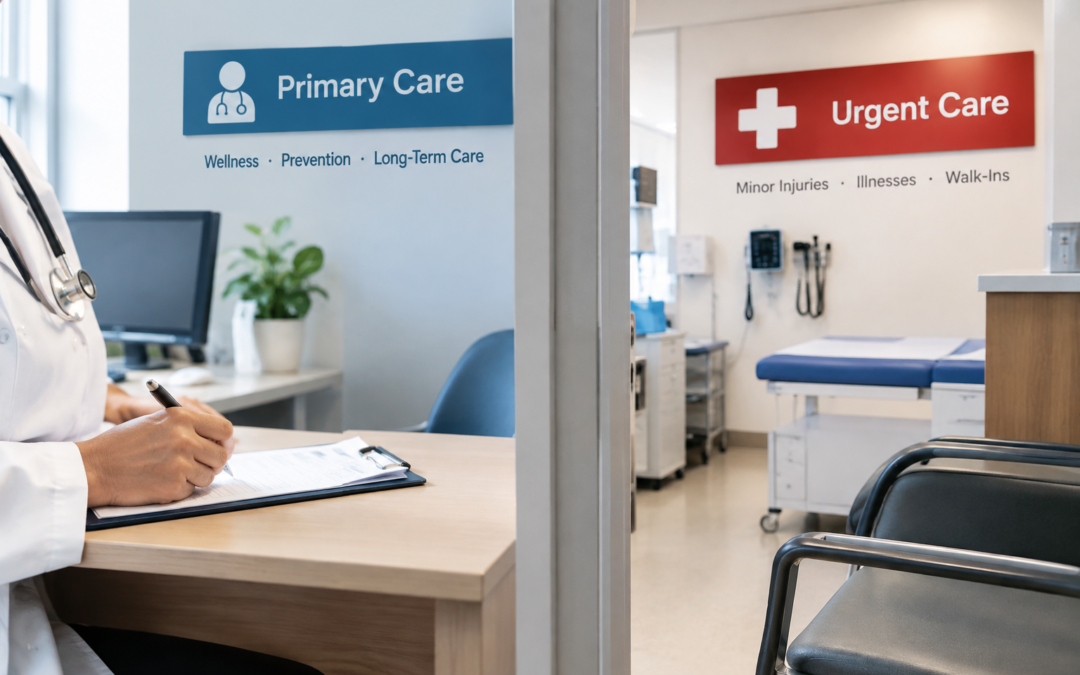
Figuring out primary care vs urgent care can feel confusing when you’re not feeling well and just want the right kind of help. Both options play a real role in your health, but they serve different purposes, and picking the wrong one can cost you time you don’t have to spend. This guide breaks down the differences so you can make a fast, confident decision the next time you or a family member gets sick.
Knowing where to go starts with understanding what each option is built for. If you already have a relationship with a doctor’s office, checking in with Primary Care Idaho Falls before you assume you need urgent care can save you a trip and a wait.
Many illnesses that feel urgent in the moment are conditions your regular doctor can treat the same day or the next morning.
Understanding the Difference Between Primary Care and Urgent Care
Primary care and urgent care solve different problems, even though both treat sick patients. Knowing the split helps you choose faster the next time symptoms show up.
Your primary care doctor knows your history: past illnesses, medications, allergies, and ongoing conditions. That context shapes every decision they make, from a diagnosis to a treatment plan. Urgent care clinics don’t have that background. They treat the symptom in front of them and move to the next patient.
This gap matters most with primary care vs urgent care decisions for chronic conditions. A flare-up in your diabetes or blood pressure often needs someone who already knows your numbers, not a walk-in clinic seeing you for the first time.
Urgent care still earns its place. It fills the gap for injuries and illnesses that can’t wait for a scheduled appointment but don’t require an emergency room. Think sprained ankles, minor cuts that need stitches, or a bad case of strep throat on a weekend.
Common Situations Where Primary Care Fits Best
Most day-to-day health concerns belong with your primary care doctor, even ones that feel urgent at first. Here are situations where sticking with your regular doctor pays off:
- A cold or flu that’s dragging on longer than a week
- Ongoing management of diabetes, high blood pressure, or high cholesterol
- Follow-up care after a hospital stay or ER visit
- Mental health concerns like anxiety, depression, or ADHD
- Routine physicals, vaccinations, and screenings
Knowing when to see primary care doctor visits fit better than a walk-in clinic comes down to one question: does this problem connect to something ongoing in your health? If yes, your regular doctor almost always gives you better, more informed care.
Building that relationship takes time, which is part of why it pays off. When you want to meet the providers who’ll actually remember your history at your next visit, that familiarity becomes the reason primary care beats a rotating cast of urgent care staff for anything beyond a one-off problem.
When Same-Day Concerns Call for Urgent Care
Some health issues can’t wait for a next-day appointment, and that’s exactly what urgent care exists for. These clinics handle same-day problems without the cost or wait time of an emergency room.
Urgent care vs doctor visits split cleanly around timing and severity. If your primary care office is closed, fully booked, or the issue popped up outside business hours, urgent care fills that gap well. Common reasons to choose urgent care include:
- Minor broken bones or sprains
- Cuts that need stitches but aren’t life threatening
- High fever that isn’t responding to home care
- Sudden ear or sinus infections causing serious pain
The urgent care vs doctor choice usually comes down to access. Your primary care team knows you best, but urgent care wins when speed matters more than history on a given day.
Emergency Warning Signs You Shouldn’t Wait On
Some symptoms don’t belong at a primary care office or an urgent care clinic. They call for immediate emergency attention, no matter the time of day.
Call 911 or head to the nearest emergency room for any of the following:
- Chest pain or pressure that doesn’t ease up
- Difficulty breathing or shortness of breath
- Sudden confusion, slurred speech, or facial drooping
- Severe bleeding that won’t stop with direct pressure
- Loss of consciousness
These warning signs deserve extra attention in older adults, since symptoms like confusion or sudden weakness can look different than they do in younger patients. A specialized senior care approach factors in how conditions like heart trouble or infection often present more subtly in aging patients, which is exactly why a doctor who already knows an older patient’s baseline health catches changes faster than a clinic seeing them for the first time.
Benefits of Having an Established Primary Care Doctor
Building a relationship with one doctor’s office changes the quality of care you get over time. It’s not just about convenience, it shapes how well problems get caught early.
Primary care for illness management works best when your doctor already understands your baseline. They notice when something’s off faster because they know what normal looks like for you specifically, not just what’s average for your age group.
An established doctor also coordinates your care across specialists, tracks your medication list for conflicts, and catches patterns across visits that a walk-in clinic never sees. That continuity turns primary care for illness into prevention, not just treatment after the fact.
Local practices that stay active in their community tend to build stronger patient relationships too. Checking a clinic’s Facebook page before you choose one gives you a feel for how a practice interacts with patients and the community it serves, beyond what a website alone shows you.
How to Decide Where to Go When You’re Sick?
A quick mental checklist makes primary care vs urgent care decisions easier in the moment, especially when you’re not feeling well enough to overthink it.
Ask yourself these questions:
- Is this life threatening? If yes, go to the ER or call 911.
- Does this connect to an existing condition? If yes, call your primary care doctor first.
- Is it after hours or does it need same-day attention for something minor? Urgent care is your best bet.
- Can it wait a day or two? Schedule with your primary care office.
This simple filter cuts through the confusion fast and points you toward the right kind of care every time.
Final Thoughts
Choosing between primary care vs urgent care doesn’t have to be a guessing game once you know what each one is built for. Primary care handles the ongoing, connected side of your health, while urgent care fills the gap for same-day problems that can’t wait but aren’t emergencies.
If you’re building that relationship with a doctor’s office for the first time or switching from urgent care visits to something more consistent, Contact US to schedule an appointment. de Bruyn Kops Family Practice is currently accepting new patients in Idaho Falls and accepts Medicaid Healthy Connections along with nearly all major insurance providers.
FAQ
Can urgent care treat chronic conditions like diabetes?
Urgent care can handle a short-term flare-up, but ongoing management works better with a primary care doctor who already knows your history and medications.
Is urgent care cheaper than an ER visit?
Yes, urgent care visits typically cost less than an emergency room for non-life-threatening issues, since ERs are equipped and staffed for more severe cases.
Should I call my primary care office before going to urgent care?
It’s worth a quick call first. Many primary care offices offer same-day or next-day slots for urgent symptoms, which keeps your care connected to someone who knows you.
What should I do if I’m not sure whether it’s an emergency?
When in doubt, err on the side of caution and call 911 or go to the ER. It’s always better to be evaluated and told you’re fine than to wait on a true emergency.